
Every growing business hits a point where things just stop working. The app that ran fine for 500 users starts crashing at 5000, systems that used to talk to each other nicely start throwing errors out of nowhere. It’s a weird moment honestly, because on paper the business looks great, more customers, more orders, more money coming in but behind the scenes it’s basically held together with tape and hope.
This is usually around when companies start looking seriously at enterprise-grade platform architecture, not because it sounds impressive in a meeting. Just because the old setup genuinely can’t take the load anymore.
So let’s talk about what this actually means in this article and why so many businesses are heading this way now.
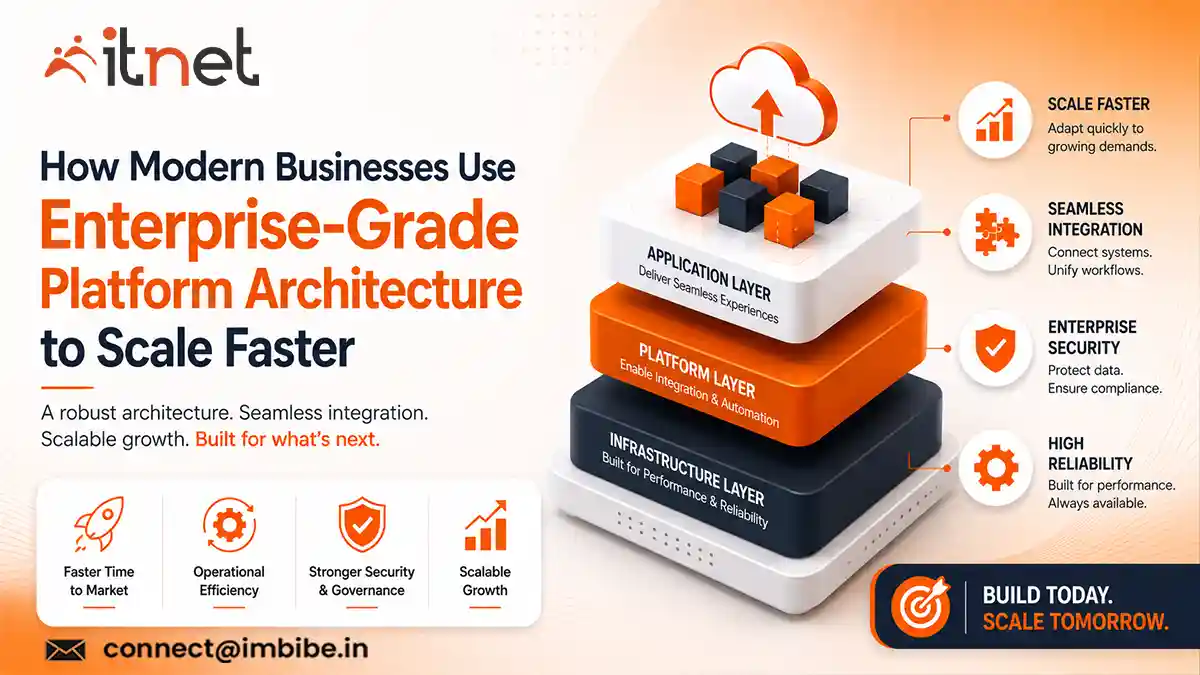 What Growing Pains Actually Look Like
Before jumping to solutions, it is worth understanding the problem first. Most businesses start small, one server, one database, maybe a quick app built just to get moving, it may work fine at the start. Nobody’s thinking about scale when they’re busy chasing their first hundred customers.
Then growth happens. Sometimes slow, sometimes really fast and that small setup starts cracking under pressure. Pages load slower than before, systems crash right during the busiest hours and customer data gets mixed up because different tools just stop syncing properly.
Almost every tech team has seen this exact story play out, the good part is, it’s fixable. The fix usually means rebuilding with enterprise-grade platform architecture in mind right from the start, something actually built to handle scale, not just duct-taped together to survive one more month.
Why “Enterprise-Grade” Actually Matters Here
The term sounds big, maybe a little intimidating too but really it just means the system is built properly for serious, large-scale use, not thrown together in a rush. Planned with growth, security, and stability in mind from day one itself.
A lot of businesses assume enterprise-grade platform architecture is only meant for huge corporations with thousands of staff. It is not true anymore, honestly, even mid-sized businesses need this kind of setup the moment their customers and data start crossing a certain point.
Where does the difference actually show up? Usually during stress. A regular setup might run fine on an ordinary day but completely fall apart during a big sale or sudden traffic spike. Enterprise-grade platform architecture is built to handle exactly this, without breaking down at the worst possible moment.
That’s the real value here, nothing fancy about it. It’s not about sounding impressive on a slide deck, it’s about actually working when it matters most when thousands of people hit the system at once and everything still needs to keep running.
Handling More Users Without Everything Breaking
One of the biggest reasons businesses move toward enterprise-grade platform architecture is pretty simple. They need to handle more users without the whole thing collapsing. Sounds obvious when you say it out loud, but so many businesses don’t plan for this until it’s already a mess.
Scalable architecture just means the system can grow along with the business. Ten thousand users today, a hundred thousand next year, the system should be able to take that jump without a full rebuild every single time something changes.
This usually comes down to cloud infrastructure, load balancing, systems that quietly add more capacity when traffic increases on their own. None of this needs to sound complicated to a business owner. The idea is simple really, build it once, properly, so it grows with you instead of breaking every time you actually succeed a bit more.
Businesses that invest early in enterprise-grade platform architecture usually save themselves a ton of stress later on. Instead of scrambling during a busy season, the system just handles the extra load quietly in the background.
Keeping Data Safe as the Business Grows
More users, more transactions, more data and more data just means more responsibility, whether you like it or not. This is another spot where enterprise-grade platform architecture really shows its value, especially with security.
Smaller setups often run on pretty basic security, just enough to get by day to day but as a business grows, the risk grows right along with it. More customer data, more payment details, sensitive business info floating around, all of it needs actual protection not just a password and a bit of luck.
Good enterprise-grade platform architecture builds security in from the start, not bolted on later as an afterthought. Things like proper data encryption, access controls, regular checks for anything odd happening inside the system.
This matters for trust too, a lot more than people think, nobody wants to deal with a company that had a data leak splashed across the news. Getting this right at the architecture level, instead of patching things up after something’s already gone wrong, saves a business from a lot of damage later.
Different Systems Actually Talking to Each Other
Most businesses today aren’t running on just one single system. There’s a website, a mobile app, maybe a CRM for the sales team, an inventory tool, a payment gateway, and honestly a bunch of other things all trying to work together somehow. When they don’t talk to each other properly, things get messy fast, really fast.
Orders stop syncing right- customer data ends up scattered across different places, someone in sales is looking at one number while someone in operations is looking at a completely different one. This kind of disconnect slows everything down and causes real confusion inside the team.
A big chunk of enterprise-grade platform architecture is about making sure all these systems can actually talk to each other without drama. Usually through proper integration and system design that’s actually planned out, so data flows the right way instead of getting stuck or duplicated somewhere in between.
Get this right, and businesses genuinely move faster. Teams stop wasting hours reconciling numbers between systems. Everything just quietly works the way it’s supposed to in the background without anyone even noticing.
Why Speed of Development Also Improves
Here’s a part people don’t always expect. Good enterprise-grade platform architecture doesn’t just help with scale or security, it also makes building new features quicker.
When the base is solid, developers spend less time fixing old broken things and more time actually building something new. A messy, badly planned system means every new feature takes longer because developers first have to work around whatever’s already broken.
With a properly built architecture, adding features becomes a lot more straightforward. The system’s designed to grow and shift without breaking existing stuff every time something new gets added. Which means the business can respond faster, whether it’s market changes, customer demands, or a sudden new opportunity.
This kind of speed matters a lot, especially in crowded markets. Businesses that can build and ship new features quickly tend to stay ahead of the ones still stuck fighting outdated, messy systems that slow everything down.
Planning for the Long Run Not Just Today
A common mistake, businesses only fix problems as they show up instead of planning ahead a bit, it works okay for a while but eventually you end up with a system that’s basically just a pile of patches loosely held together.
Enterprise-grade platform architecture takes a different route, built with the future in mind, not only today’s needs which means thinking about where the business might be in two, maybe three years, and building something that can support that without needing a full overhaul later on.
This kind of planning saves a lot of money and headache down the line. Instead of rebuilding the whole system every couple of years, businesses with proper architecture just add and adjust as they grow, not starting from zero each time.
Final Thoughts
Scaling a business isn’t only about landing more customers or closing more sales, it’s also about making sure everything running behind the scenes can actually keep up with that growth without falling apart. That’s exactly why more businesses today are putting money into enterprise-grade platform architecture, not because it’s trendy but because it solves real problems that show up the moment a business starts growing.
Getting this foundation right early saves so much pain later, crashes during busy periods, security scares, systems that just refuse to talk to each other anymore.
Looking to build a system that actually grows with your business?
ItNet by Imbibe Tech specialises in enterprise-grade platform architecture designed for real scale, security, and speed.
Get in touch with ItNet by Imbibe Tech today and build a foundation your business can actually rely on as it grows.

