
Learning today isn’t confined to the classroom, timetable or printed study material. Students attend live online sessions, watch recorded lectures, do assignments and take mock tests from wherever they are. Schools, coaching centres and independent educators are moving towards digital learning so that they can reach more learners and manage their programmes better.
But teaching online is not all there is to it. Educators need to organise courses; share learning resources; schedule assessments; evaluate performance and communicate results. When these activities happen across different apps and spreadsheets, they are time-consuming and confusing.
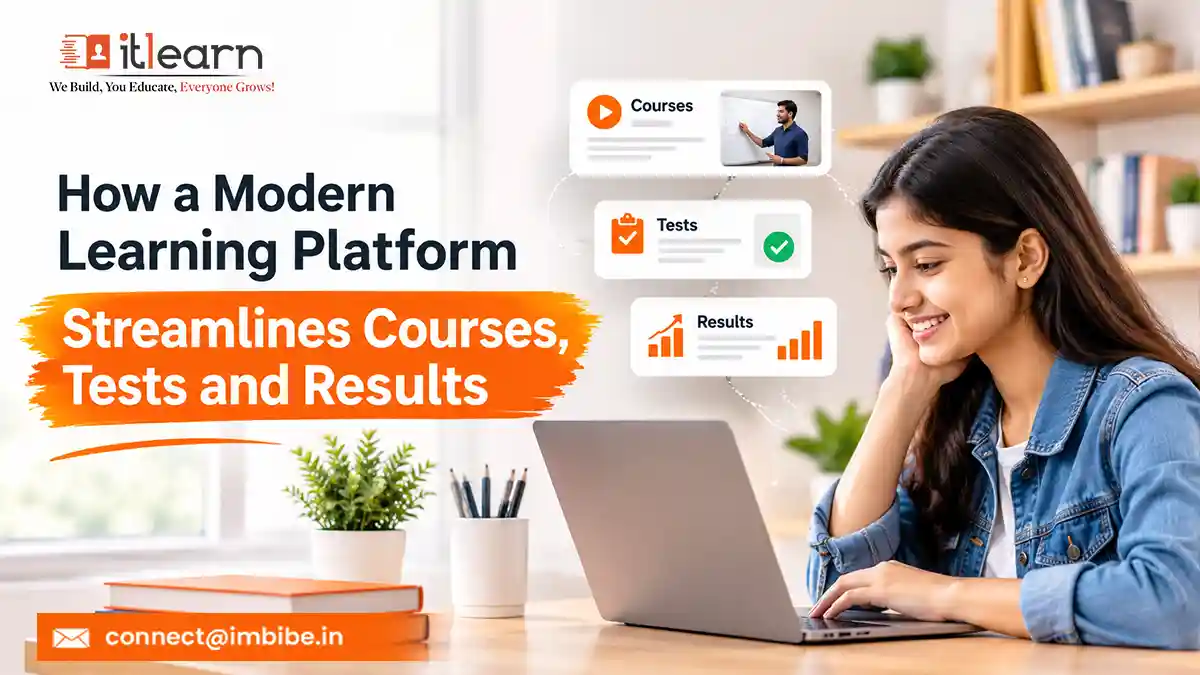
And that’s where a modern LMS (Learning Management System) comes in. Putting course delivery, testing and performance tracking together in one place (an LMS does this) means educators can have a more organised learning experience; students have a structured way to access lessons, practise concepts and see how they are progressing.
So for institutions looking for the best platform for online courses with certification and testing, it’s not so much about how lessons are delivered but how the whole learning journey is managed.
Why Is a Unified Learning Platform Important?
Imagine a coaching institute with several batches of students. Teachers upload lectures to one application, share notes in messaging groups, test on another platform and store results in spreadsheets. Each activity might be working independently, but coordination is hard work.
A unified learning platform brings all of these activities into one digital space. Course materials, live sessions, recorded lessons, assessments and learner progress can all be managed through a central system.
This makes everyday administration easier. Students have a place to go to find their learning resources; teachers spend less time coordinating tools; administrators get better visibility into course activity and learner performance.
The advantage is most relevant for schools, colleges, competitive examination coaching centres, and corporate training teams where multiple courses or groups of learners are managed.
How an LMS Makes Course Creation and Delivery Easy
An online course can’t be just a series of video lectures; there has to be a sequence, learning material relevant to that sequence and ways for students to check understanding.
A modern LMS lets educators group courses into subjects, modules or learning sections. They can upload lectures recorded for the course; share study material; put content in order so students can follow the course more logically (files and messages sifted through instead of lines of text).
Recorded lessons are especially useful for flexible learning: a student who misses class can re-watch the lecture later; someone studying for an exam can replay a difficult topic to revise it. Learning isn’t as dependent on one classroom session.
Live classes add another dimension to digital education. Teachers and students talk, concepts are discussed, and doubts are clarified in real time. Live teaching with recorded resources gives learners interaction as well as flexibility.
A well-designed platform therefore accommodates different learning styles but doesn’t make course management overly complicated.
Mock Tests and Assessments Are Important in Better Learning
Just because a student has done the lesson does not mean that he/she understood it. Assessment (regular assessment) allows teachers to find out if learners can apply what they have learnt and where more support is needed.
This is why choosing the best platform for online courses with mock tests and assessments matters to educators and institutions who want learning to be measurable.
Online assessment tools enable teachers to create tests, quizzes and practice exercises alongside their course material. Students take these assessments online so it’s easier for them to practise regularly and get used to exam formats.
Mock tests are particularly useful for competitive examination preparation because they give learners the chance to get used to timed assessments, practise answering questions in exam conditions, and become more familiar with the examination process.
Practice tests have a slightly different function too: Students go back over concepts, test their understanding and work on topics that need improvement. When assessments are built into the course delivery practice becomes part of the learning process rather than something tacked on at the end.
For teachers digital tests can also reduce the amount of work needed for printing out question papers, collecting responses and organising evaluation records.
How Results and Performance Analytics Improve Learning
One of the biggest benefits of digital learning is that we know how students are progressing. In a traditional classroom teachers might use periodic tests, assignments and one-on-one interactions to measure performance but those still work (they just get harder). It’s hard to monitor large groups of learners continuously like this.
A modern learning platform makes assessment information easier to organise and review. Teachers can look at test scores, see what kids are struggling with and compare progress between batches. Instead of waiting for the next big exam they can use results from assessment to find out where kids aren’t learning earlier.
For students, timely feedback matters. Knowing which questions were answered wrong and which topics need more attention helps them plan their preparation better. It also motivates learners to take responsibility for their own progress.
Performance analytics are not about showing marks. Their value is in helping educators make better decisions about teaching methods, revision schedules and support.
Why Certifications Add Value to Online Courses
Not everyone who takes a course is done with that — they also need a way of showing what they have learned (PD programmes, skill-based courses and structured training initiatives [training plans]).
A learning platform that supports certification can link participation to assessment and completion. Programmes can be built around learning objectives; students understand those objectives, and certificates are given when criteria are met.
This is what makes a best platform for online courses with certification and testing especially useful to training institutes and educators who want to offer more than recorded lessons.
However, certification is not just course registration — it needs to show what has been learned and assessed (not just registered). Institutions need to define completion requirements and communicate what a certificate means. If learning material, assessments and certification are all in one system, then it’s easier to organise and monitor.
Different Learning Needs Across Institutions
A school, a competitive examination coaching centre and corporate training department may have very different learning needs, but all three need an organised way to deliver content, assess learners and monitor outcomes.
Schools and colleges may use digital platforms for classroom teaching, sharing resources and assessment; coaching institutes can organise subject-wise courses (mock exams, etc.), monitor preparation of batches etc.; independent educators can build structured online programmes; corporate teams can use digital learning environments to train employees.
A scalable platform should accommodate these different requirements without making everyday administration too difficult. Centralised course management, flexible learning schedules and records of assessment can all help institutions manage their programmes more consistently.
Recorded lessons and practice resources also help learners who need more time with particular concepts. That’s why digital learning works beyond class hours.
What Should You Look For in a Modern Learning Platform?
You don’t look at the look of its dashboard or how many features it lists on its website when you are choosing an LMS. You want the platform to support the teaching and learning process itself.
Course creation and content organisation should be simple so educators can arrange lessons and learning resources logically. Live and recorded teaching formats can be used for different learning styles; tests and practice assessments can be built into the course so evaluation becomes part of the course itself.
Performance reporting is another important factor — teachers and administrators need to know learner progress without having to manually aggregate information from multiple sources. Institutions running several batches or programmes also need scalability, user access support and branding (the ability to maintain their own branding).
Ultimately, the right platform is one that reduces administrative friction but makes learning more accessible, structured and measurable.
ItLearn Brings Courses, Testing and Results Together
Schools, coaching centres, teachers and corporate training teams who want to manage the whole learning journey have an integrated LMS in ItLearn by Imbibe Technologies — live classes, pre-recorded lectures, mock tests, practice sessions and performance analytics all come under one roof; structured courses, assessments and certification workflows are supported, as well as educators managing delivery and evaluation of learning through one environment. Flexible learning options and a branded platform experience help organisations create a more organised digital learning ecosystem. Check out ItLearn by Imbibe Technologies to find out how it can simplify course management, testing and learner performance tracking.
Book Demo+1
Conclusion: Make Learning More Structured, Measurable and Accessible
A modern learning platform doesn’t just move classroom content online — it links lessons to assessments; practice to feedback; course completion to measurable outcomes. When all of these activities happen through one system, educators spend less time coordinating administrative tasks and more time supporting learners.
For students, this is easier access to learning materials, practice opportunities on a regular basis and an idea of where they are in the process. For institutions, an integrated LMS gives them a more organised way to manage courses, tests, results and certifications as programmes grow.
If you want to give learners a more connected digital learning experience, then now is the time to see what technology can do for you. Try ItLearn by Imbibe Technologies, request a personalised demo and move on to smarter course delivery and assessment management.

