
One thing that every laboratory, big or small, has in common: accuracy is important. One wrong sample, a late report or data entry error can directly impact patient care. As testing volumes increase and turnaround times get shorter, laboratories are discovering that the old ways of managing operations just can’t keep up. In the past, paper records, manual registers and disconnected software may have been enough, but now they are creating more challenges than solutions.
This is the reason why more diagnostic centres are investing in lab diagnosis management system. A modern Laboratory Information Management System (LIMS) helps laboratories to manage their entire lab workflow from patient registration and sample collection to testing, reporting, billing and record management. Labs can speed up their day-to-day operations, improve accuracy, and make monitoring much easier by managing everything from one platform instead of juggling multiple systems or manual processes.
 Reducing Manual Errors Through Automation
One of LIMS biggest strengths is that it removes unnecessary manual work. Laboratory professionals are highly skilled but their day could be spent on repetitive tasks such as entering patient details, updating test statuses or preparing reports. Every manual step is another chance for an error to slip in, particularly when labs are processing hundreds or thousands of samples a day.
A lab diagnosis management system automates all these routine activities, proper sample tracking and real time recording of each update. This reduces errors and also allows laboratory teams to focus on delivering accurate diagnostic results.
Accelerated Workflows for Better Patient Care
Speed has been another defining factor in laboratory services. Doctors need to make treatment decisions right now and reports are the way they do it. Of course, patients want to see the results ASAP.
Delays impact both patient satisfaction and clinical outcomes. A well-designed LIMS automates sample assignment, tracks testing progress and generates reports as soon as results are verified, thus streamlining every stage of the testing process. The system handles repetitive workflows in the background, allowing laboratory staff to focus on quality instead of rushing to complete administrative work.
The Importance of Laboratory Reporting Software
The reporting process has also evolved dramatically over the last few years. Laboratories are expected to produce reports that are accurate, clear and professional, and delivered promptly. This is where solid laboratory reporting software is imperative. Laboratories can use predefined templates to prepare standardized reports (instead of preparing reports manually), ensuring consistency across departments. Automated calculations, reference ranges and validation checks reduce the chance of reporting errors whilst ensuring every report is in the same professional format.
The delivery of digital is now just as important as the generation of the report itself. Most patients don’t want to go back to the lab to get a printed copy of their results. Doctors, too, frequently need to see the results instantly when they’re with patients. The laboratory reporting software of today allows reports to be sent securely via email, patient portals or messaging services, making the process easier for everyone involved. In the end, faster communication means faster diagnosis and better care for patients.
How Pathology Labs Benefit from Specialized Reporting
Pathology laboratories have even more trouble with reporting because their reports are often detailed and descriptive rather than numerical. Accurate recording of clinical findings is required in the careful structuring of documentation for specialized investigations like histopathology, cytology, biopsy examinations and others.
This process becomes easy with special pathology lab report software providing customizable templates to pathologists to prepare detailed, consistent and easy to read reports. Standardized reporting not only increases efficiency, but also helps to ensure more consistency between different specialists and laboratory locations.
Centralized Data Management Improves Efficiency
A LIMS does more than improve workflows, it is also vital for laboratory data management. Every day laboratories generate valuable information that must be securely stored and quickly retrieved when needed.
Sifting through paper files or disparate databases is time consuming and unreliable. With a centralized digital system laboratories can keep the entire patient history, previous reports, quality control records and operational data all in one safe location. Healthcare providers are able to pull up history in seconds making it much easier to do follow up testing and clinical comparisons.
Scalable LIMS for Expansion
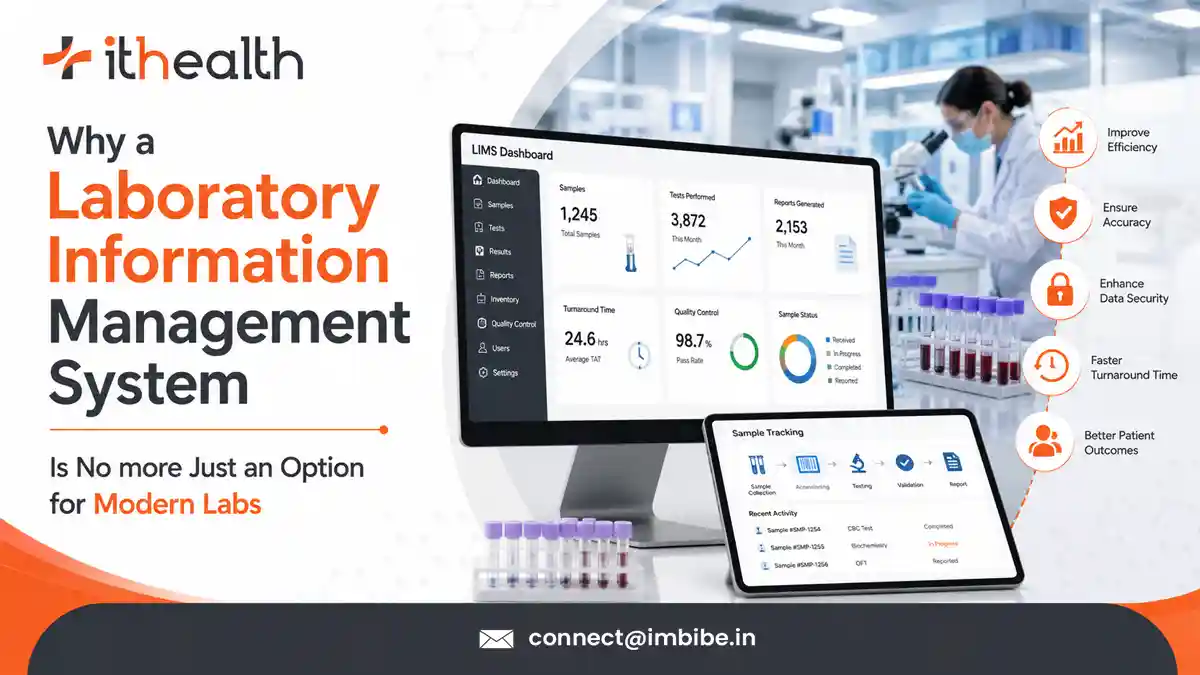
As laboratories grow larger, operations become more complex. Scaling to multiple branches or expanding testing capacity is difficult without standardized processes. The scalable LIMS enables administrators to manage workflows, reports, inventory, staff activity and performance from a centralized dashboard, which promotes consistency across multiple locations. This guarantees that patients will receive the same level of service regardless of which lab location they visit.
Data Security and the Future of Lab Management
In today’s digital healthcare environment, data security is just as important. Laboratories contain very sensitive patient information that must be protected at all levels. Role-based security, encrypted databases, audit trails and secure backup systems are all features of contemporary Laboratory Information Management Systems that help safeguard sensitive medical records. These features assist in protecting data, as well as helping laboratories meet regulatory and accreditation requirements. Industry guidance from the last couple of years also indicates more broad acceptance of AI-enabled workflow automation and stronger security capabilities in modern LIMS platforms as laboratories continue their digital transformation.
The future of laboratory management is more than just digitization. Artificial intelligence, automation, predictive analytics and smart workflow optimization are becoming increasingly valuable tools for improving laboratory efficiency. These technologies don’t substitute for skilled lab professionals, but they do reduce repetitive work and give teams the ability to make faster, better-informed decisions. Today, laboratories that embrace modern management systems are better equipped to handle the rising demands of diagnostics tomorrow.
Conclusion
A Laboratory Information Management System is no longer just a piece of software but has become an integral part of delivering reliable, efficient and patient-centred diagnostic services. As labs deal with increasing volumes of testing and higher expectations for speed and accuracy, selecting a solution that combines automation, intelligent reporting, secure data management and scalable workflows is a strategic investment.
ItHealth brings these capabilities together in a single platform so laboratories can streamline operations, improve reporting accuracy and build a stronger foundation for long-term growth in today’s digital healthcare environment.

