
WhatsApp has become a normal part of business communication in India. People use it to ask questions, check prices, book services, share documents, follow up on orders and even get support after a purchase.
For businesses, this can become difficult when the number of messages keeps growing. A small team may manage 20 or 30 chats without much trouble. But when hundreds of customers start sending messages every day, replying to everyone on time becomes hard.
This is where a WhatsApp automation platform can help.
WhatsApp business automation means using software to handle regular WhatsApp tasks automatically. It does not mean every conversation has to be handled by a bot. A good setup can automate simple questions and tasks while allowing a human team member to take over when needed.
For Indian businesses, this can be especially useful because customers may send messages at any time. They may also ask the same questions again and again.
A WhatsApp automation platform in India can help businesses manage these conversations, send approved messages, collect customer information, run campaigns and keep track of conversations from one place.
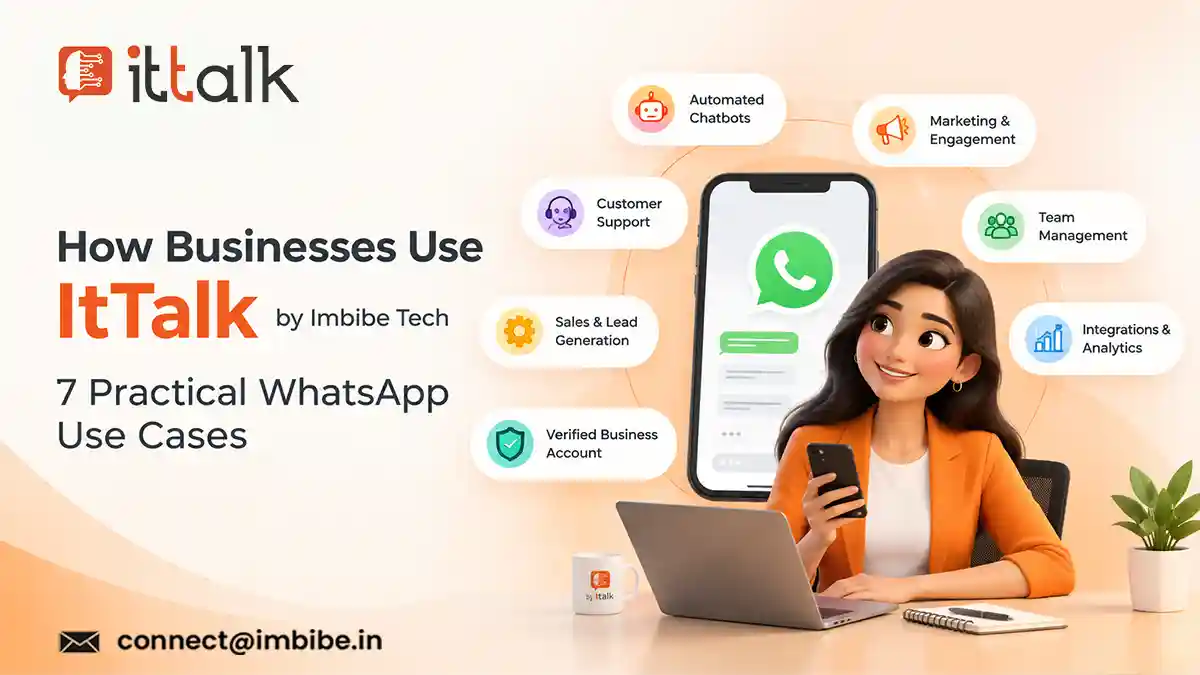 Here are 10 practical WhatsApp use cases that businesses can actually use.
1. Answering Common Customer Questions
One of the simplest uses of WhatsApp automation is answering common questions.
Most businesses receive many messages that are almost the same. Customers may ask:
“What is the price?”
“Where are you located?”
“What are your working hours?”
“Do you provide delivery?”
“How can I book?”
“What documents do I need?”
A team member may spend a lot of time replying to these questions manually. A WhatsApp automation platform can handle such questions automatically.
For example, a customer can send “price” on WhatsApp. The system can reply with the relevant pricing information. If the customer asks about working hours, it can provide the working hours without waiting for an employee.
This does not mean that employees are no longer needed. If the question is more specific, the conversation can be passed to a person.
ItTalk by Imbibe Tech can be used for this type of WhatsApp business automation. Its AI chatbot can handle common customer questions and help businesses reduce the number of repetitive replies handled manually.
The useful part is that customers can get an answer quickly instead of waiting for someone from the company to become available.
2. Lead Generation Through WhatsApp
WhatsApp can also be used to collect leads.
Suppose someone visits a website and wants to know more about a service. Instead of filling out a long form, they can start a WhatsApp conversation.
The automation can ask a few simple questions.
For example:
“Which service are you interested in?”
“What is your location?”
“When do you need the service?”
“What is your approximate budget?”
The answers can then be collected as lead information.
This makes WhatsApp useful not just for chatting but also for starting the sales process.
A WhatsApp business automation platform in India can help businesses organise these incoming enquiries instead of keeping customer details across different chats and spreadsheets.
ItTalk also has an inbuilt CRM system. This means businesses can manage customer information and conversations in the same system instead of depending on a separate CRM for every small task.
For sales teams, this can make follow-up easier because the team can see the customer’s earlier conversation and basic details before contacting them.
3. Appointment and Booking Reminders
Missed appointments are a common problem for businesses such as clinics, salons, service centres, consultants and other appointment-based businesses.
A customer may book an appointment today and forget about it after a few days.
WhatsApp reminders can help.
For example, a business can send a message before the appointment with information such as:
- Appointment date
- Appointment time
- Location
- Booking details
- Instructions for the customer
The same approach can be used for bookings and service appointments.
A customer who has booked a service can receive a reminder instead of the business team calling every customer manually.
This can save time for staff and also make communication easier for customers.
With ItTalk, businesses can use WhatsApp automation for customer communication and follow-ups. The exact workflow can depend on the business and the integrations being used.
The important thing is to automate the repeated part of the process while keeping human support available when something unusual happens.
4. Order and Delivery Updates
Customers want to know what is happening with their orders.
After placing an order, they may ask:
“Has my order been confirmed?”
“Has it been shipped?”
“When will it arrive?”
Businesses can use WhatsApp to send updates at different stages of the order.
For example, a customer may receive a confirmation message after placing an order. Later, they can receive another message when the order is shipped.
This reduces the need for customers to contact support just to check basic order information.
For an ecommerce business, this can be very useful because order-related questions can take up a large part of the support team’s time.
A WhatsApp automation platform can connect different steps in the customer journey and send the right message when a particular event happens, depending on the available integration.
ItTalk supports WhatsApp communication, automation and analytics, which can help businesses keep track of how customers are responding to their messages.
5. Customer Support
Customer support is one of the most practical uses of WhatsApp automation.
Many customers prefer WhatsApp because they already use it every day. They do not always want to call a support number or send an email.
A business can create automated replies for simple support questions.
For example, a customer may ask how to reset a password. The automated system can provide the steps.
Another customer may ask about return rules. The system can share the relevant information.
If the problem needs human attention, the chat can be moved to a support employee.
This type of setup is useful because the support team does not have to answer every basic question manually.
ItTalk’s AI chatbot can help businesses handle common queries. It can work as the first point of contact and help answer repetitive questions before a human agent becomes involved.
For businesses receiving many WhatsApp enquiries, this can make daily support work more manageable.
6. Sending Bulk WhatsApp Campaigns
WhatsApp is also used by businesses for marketing campaigns.
A business may want to inform customers about a new product, sale, event, service or special offer.
Instead of sending each message manually, businesses can use a WhatsApp automation platform to manage campaigns.
However, bulk messaging should not simply mean sending the same message to every number available.
Businesses need to communicate with people who have agreed to receive messages and should follow applicable WhatsApp rules and policies.
The message should also be relevant.
For example, a clothing store may send a new collection message to customers who have shown interest in clothing. A coaching business may send course information to people who previously asked about a particular course.
ItTalk provides campaign and bulk messaging automation, along with rich media messaging. This allows businesses to plan WhatsApp communication in a more organised way.
Images, videos and other supported media can also be used when appropriate.
The main idea is simple: send useful information to the right audience instead of treating WhatsApp like a random messaging list.
7. Follow-Ups With Interested Customers
Getting a lead is only the first step.
Many customers do not buy immediately. They may ask for the price and then disappear. They may say they will discuss it with someone. They may need a few days before making a decision.
Sales teams have to follow up with such customers.
WhatsApp automation can make this process easier.
For example, if a person enquires about a service but does not complete the next step, the business can send a follow-up message at a suitable time.
A simple message can ask:
“Would you like more information about the service?”
Or:
“Do you have any questions about the quotation we shared?”
This saves sales staff from remembering every follow-up manually.
With ItTalk, businesses can manage conversations and customer information through its inbuilt CRM. This can help sales teams keep track of leads and their communication history.
Automation should still be used carefully. Too many follow-up messages can annoy customers. The goal is to stay connected without becoming a source of unwanted messages.
8. Collecting Customer Feedback
Businesses often want to know what customers think after a purchase or service.
WhatsApp can make feedback collection easier.
After a customer completes a purchase or service, the business can send a short message asking for feedback.
For example:
“How was your experience?”
The customer can then select an option or reply with their comments, depending on how the workflow is designed.
This can help businesses understand common complaints and customer preferences.
It can also be useful for finding areas where the business needs to improve.
A WhatsApp automation platform can make the process more consistent because feedback requests do not depend entirely on employees remembering to send them.
ItTalk’s automation and analytics features can help businesses manage customer communication and understand campaign or conversation activity.
The feedback itself should be used carefully. Businesses should not ask customers for feedback repeatedly or send unnecessary messages.
9. Sharing Documents and Important Information
Some businesses need to share documents with customers regularly.
For example, an education company may need to share course information. A travel company may send booking details. A service business may share quotations or instructions.
WhatsApp can be used as a convenient communication channel for such information, where the relevant WhatsApp features and business policies allow it.
Automation can make the process easier.
A customer may ask for a quotation and receive the relevant information automatically. Another customer may ask for a brochure and receive the appropriate file or message.
This is especially useful when the same documents are requested frequently.
Instead of an employee searching through folders every time someone asks for the same information, the automated workflow can handle the initial request.
ItTalk supports rich media messaging, which can be useful for businesses that need to share more than plain text during customer conversations.
The exact files and message types should always follow the applicable WhatsApp requirements.
10. Managing Multiple Customer Conversations
As a business grows, WhatsApp conversations can become difficult to manage.
One employee may be talking to 20 customers. Another may have 30 conversations open. Some leads may be new, while others may already be customers.
Without a proper system, important messages can get missed.
A WhatsApp automation platform can bring customer conversations and automation into a more organised workflow.
ItTalk is designed to help businesses manage WhatsApp communication from one platform. Along with automation, it provides an inbuilt CRM, campaign tools, rich media messaging and analytics.
This can be useful for businesses that want to manage different parts of their WhatsApp communication without switching between multiple tools.
For example, a business can use WhatsApp for:
- Customer enquiries
- Lead collection
- Sales follow-ups
- Customer support
- Marketing campaigns
- Customer updates
- Feedback
- Rich media communication
The main benefit is not simply sending more messages. It is having a better way to manage conversations as the business grows.
How to Choose a WhatsApp Automation Platform in India
There are many tools available for WhatsApp communication, so businesses should not select a platform only because it offers bulk messaging.
First, check what type of automation the platform actually supports.
Does it support customer support?
Can it handle common questions?
Can leads be collected?
Is there a CRM?
Can the sales team manage conversations?
Does it provide campaign tools?
Can the business see useful analytics?
It is also important to understand how the platform handles WhatsApp’s business requirements and messaging policies.
For Indian businesses, local support and practical integrations can also matter. A business may have different needs from a large international company.
The right whatsapp automation platform in India should fit the actual workflow of the business instead of forcing the business to change everything around the software.
WhatsApp Automation Is Not Only About Chatbots
One common misunderstanding is that WhatsApp automation means adding a chatbot and leaving everything else to it.
That is not how a useful setup needs to work.
Automation can cover small tasks such as answering common questions, collecting information, sending updates, starting campaigns and reminding customers.
Human employees can handle conversations that need personal attention.
This combination can work better than either approach alone.
For example, a customer may start by asking a basic question. The automated system answers it. The customer then asks for a customised quotation. At that point, the conversation can move to a sales employee.
This keeps the simple work automated while giving customers access to a person when required.
Why Businesses Are Using WhatsApp Automation
The main reason is simple: customers are already using WhatsApp.
Businesses do not always need to convince customers to download another application or learn a new communication system.
WhatsApp is already familiar to many people.
Automation then helps businesses handle the growing number of conversations.
It can reduce repetitive work, make follow-ups easier, help organise leads and allow businesses to communicate with customers in a more regular way.
But automation should not become an excuse to send more messages.
Good WhatsApp communication is still about sending useful information, responding at the right time and making it easy for customers to get help.
Final Thoughts
WhatsApp business automation can be useful for much more than sending bulk messages.
Businesses can use it for customer support, lead generation, follow-ups, appointment reminders, order updates, campaigns, feedback, document sharing and day-to-day conversation management.
The biggest advantage comes when these different activities work together.
For businesses looking for a whatsapp business automation platform in India, ItTalk by Imbibe Tech offers a combination of WhatsApp automation, AI chatbot support, an inbuilt CRM, campaign and bulk messaging automation, rich media messaging and analytics.
Instead of managing customer conversations, leads and campaigns separately, businesses can bring these activities into one WhatsApp-focused system.
If your business is receiving regular WhatsApp enquiries and your team is spending too much time replying to the same questions, following up with leads or managing campaigns manually, it may be time to look at automation.
ItTalk by Imbibe Tech can help you turn WhatsApp into a more organised business communication channel. From answering common customer questions to managing leads, campaigns and customer conversations, ItTalk gives businesses the tools to automate routine WhatsApp work while keeping human support where it matters.
Start using WhatsApp more effectively with ItTalk by Imbibe Tech and build a simpler way to manage your customer conversations.

