
Walk into a busy laboratory on any working day and there is a lot happening at once. Samples are coming in, technicians are processing tests, reports are being checked, equipment needs attention, records have to be maintained and someone is always looking for a piece of information.
From the outside, laboratory work may look like a straightforward sequence: collect a sample, run a test and issue a report. In reality, there is a lot happening between those three steps.
A sample has to be identified correctly, tracked through different stages, matched with the right patient information, tested, verified and finally reported. At the same time, the laboratory has to keep up with quality checks, equipment records, documentation, compliance requirements and day-to-day operational demands.
As the workload grows, managing all of this manually can become difficult. This is why laboratory management today is not just about getting tests done. It is also about making sure information moves smoothly through the laboratory without creating unnecessary work for the people handling it.
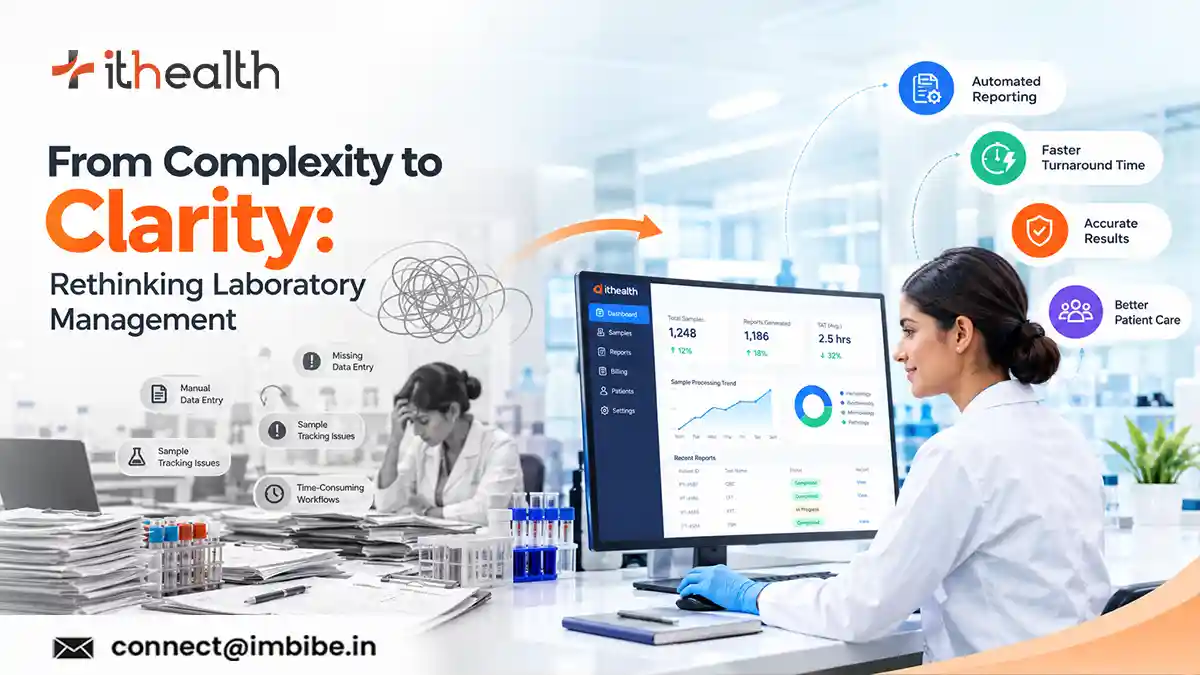 Why Laboratory Management Is Getting More Complicated
Laboratories have always dealt with detailed processes. What has changed is the sheer amount of information they now have to handle.
A modern laboratory may be managing hundreds or thousands of samples, multiple testing departments, different instruments, patient records, reports and quality-control information at the same time.
When these activities are handled through paper registers, spreadsheets or separate systems, keeping track of everything can become a job in itself.
Someone may have to check one system for sample details, another record for test status and a spreadsheet for operational information. Small tasks like finding a pending report or checking the history of a sample can end up taking much longer than they should.
This is one reason laboratories are increasingly looking at digital solutions and searching for the best laboratory software in India that can bring everyday processes into one more manageable workflow.
When Different Processes Don’t Talk to Each Other
One of the most common problems in laboratory operations is disconnected information.
Imagine a sample being registered in one place, its test details maintained somewhere else and the final report prepared separately. Staff may have to enter the same information more than once just to keep these stages connected.
It may seem like a small inconvenience. Across hundreds of samples, however, those small inconveniences add up.
It can also make basic questions surprisingly difficult to answer.
Where is the sample right now? Has the test been completed? Is the report waiting for verification? Which samples are still pending? Was a particular result amended?
When information is spread across different records, finding the answer can take time.
A connected workflow can make this much simpler. Instead of information getting lost between different stages, it can move along with the sample and remain available to the people who need it.
For pathology laboratories in particular, this is where pathology lab software in India can become useful. The right system can help bring sample registration, test processing, reporting and related records into a more organised workflow.
Sample Tracking Is More Important Than It Looks
A sample is not simply a tube sitting on a laboratory counter. It carries information that has to remain accurate throughout its journey.
From collection and registration to processing, testing and reporting, every stage matters.
A misplaced sample, incorrect label or incomplete record can create problems further down the line. Good sample tracking provides a clear trail of where the sample has been and what has happened to it.
Digital identification and barcode-based tracking can make this process easier by reducing the dependence on handwritten records and repeated manual identification.
The benefit is not just convenience. It gives laboratory staff greater visibility and makes it easier to trace a sample when someone needs to know exactly what happened to it.
Less Repetitive Data Entry, More Time for Actual Work
Nobody goes into laboratory work because they enjoy typing the same information into three different records.
Yet repetitive data entry can become a significant part of laboratory administration.
The problem is not only the time involved. Copying information manually creates opportunities for spelling mistakes, incorrect numbers, missing fields or simple duplication.
Automation can take some of this repetitive work off the team’s plate. Information entered at one stage can be carried forward where appropriate, rather than being typed again and again.
That does not mean removing people from the process. Laboratory professionals still need to review, verify and interpret information. The idea is simply to let technology handle some of the routine work so people can concentrate on the work that actually needs their attention.
A Laboratory Report Is More Than a Document
The final report is often what the patient or clinician sees, but producing that report involves several steps behind the scenes.
Results need to be recorded correctly, reviewed and, where required, authorised before they are released. Reports also need to be clear and consistent.
Preparing every report manually can take considerable time, particularly in a high-volume laboratory.
Automated report generation can make this easier by using standardised formats and pulling relevant information into the report. This can reduce repetitive work and help maintain consistency.
But automation should never mean blindly releasing information. Human review remains important, particularly where results require professional validation or special attention.
The real value of technology is in making the process smoother without taking away the checks that protect accuracy.
Quality Control Happens Every Day
Quality management is sometimes associated with audits and accreditation inspections. In a laboratory, however, quality is an everyday responsibility.
Equipment needs to be maintained. Calibration records need to be kept. Reagents need to be monitored. Quality-control results need to be documented. Corrective actions may need to be recorded and followed up.
When all of this information lives in separate files and registers, keeping track of it can become unnecessarily complicated.
A structured digital system can bring these records together and make them easier to access when needed.
This is particularly useful for laboratories working with quality and accreditation requirements, where proper documentation and traceability are not optional extras but part of the way the laboratory operates.
Compliance Means Being Able to Show What Happened
In laboratory management, it is not always enough to say that something was done. There often needs to be a record showing when it was done, who handled it and what changed.
This is where organised digital records can make a real difference.
Access controls, audit trails and structured documentation can help laboratories keep track of activities and changes. Instead of searching through files or trying to piece together information from different sources, staff can have a clearer record of what happened.
Good documentation may not be the most exciting part of laboratory work, but when an issue needs to be investigated or information needs to be retrieved quickly, it becomes extremely valuable.
The Data Sitting Inside a Laboratory Can Tell a Story
Every laboratory generates useful operational data.
How many samples are being processed? Which tests take longer? How long does it usually take for a report to be released? Are certain samples being rejected more often? Is workload increasing at particular times?
These numbers can tell laboratory managers where things are running smoothly and where there may be room for improvement.
The difficulty is that data is only useful when people can actually make sense of it.
Instead of manually going through hundreds of records, dashboards and reports can bring important patterns to the surface. This can help with workload planning, resource allocation and identifying operational bottlenecks.
This is also why the search for the best laboratory management software in India should go beyond a list of features. What matters is whether the software can make everyday information easier to understand and use.
The Human Side of Choosing Laboratory Software
It is tempting to think that the best pathology software in India is simply the one with the longest feature list. In practice, the decision is rarely that simple.
A laboratory has its own workflow, staff structure, testing volume and operational challenges. Software that works well for one laboratory may not necessarily fit another in exactly the same way.
Ease of use matters. So does the ability to adapt to existing workflows, maintain reliable records and reduce unnecessary manual work.
A digital system cannot fix a poorly defined process or replace proper staff training. People still need to understand the processes they are following and why those processes matter.
The best technology is often the technology that does not feel like extra work.
Staff should not have to fight their way through complicated screens just to complete a routine task. Information should be easy to find. Repetitive steps should be reduced where possible. Important alerts should be visible. And professionals should remain in control of decisions that require their experience and judgement.
In other words, technology should make the working day easier, not give the laboratory another problem to manage.
Moving From Managing Records to Managing the Laboratory
There is a bigger shift happening in laboratory management.
Instead of looking at sample tracking, reporting, quality control, equipment records and analytics as completely separate activities, laboratories can start treating them as connected parts of the same workflow.
That connection matters.
When information is available where it is needed, staff spend less time searching for records and more time doing their actual jobs. When processes are easier to follow, there is less scope for information to get lost between stages.
Ultimately, the goal is quite simple: less time spent managing paperwork and more time spent managing the work.
Where ItHealth Fits into the Picture
ItHealth by Imbibe Tech is a cloud-based Laboratory Information Management System designed to bring different laboratory processes into a more connected digital workflow. It supports areas such as sample management, reporting and laboratory data handling, while features such as its Smart Report Engine and automated reporting can help reduce repetitive reporting work and bring greater consistency to everyday processes. The idea is not to add another layer of complexity, but to give laboratories a more organised way of managing the information already flowing through them.
The Future of Laboratory Management Is About Simplicity
Laboratories are unlikely to become less busy. Testing volumes will continue to change, data will continue to grow and expectations around accuracy, speed, traceability and quality will remain high.
The answer does not have to be more paperwork, more spreadsheets or more people chasing information from one department to another.
It can start with something much simpler: making the information and processes already in place easier to manage.
When a sample can be tracked without a paper trail, when a report can be prepared without repeated data entry, when quality records can be found without searching through files and when managers can actually see what is happening across the laboratory, complexity begins to feel a little more manageable.
That is ultimately what better laboratory management should achieve.
Not technology for the sake of technology. Not more systems to maintain.
Just a clearer, more connected way of getting the work done.

